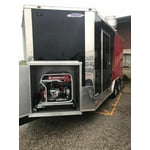
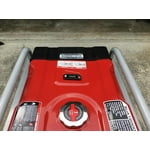
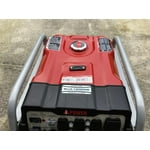
The unit starts easily and runs well, and for the most part, the design is capable and well-executed. Fit and finish (pow der coating)is well above typical for this class of generato. IIt recovers from a sudden heavy load quickly (such as a 240V oven), a plus.
It is not without shortcomings however, both in design details and in the owner's manual.
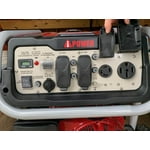
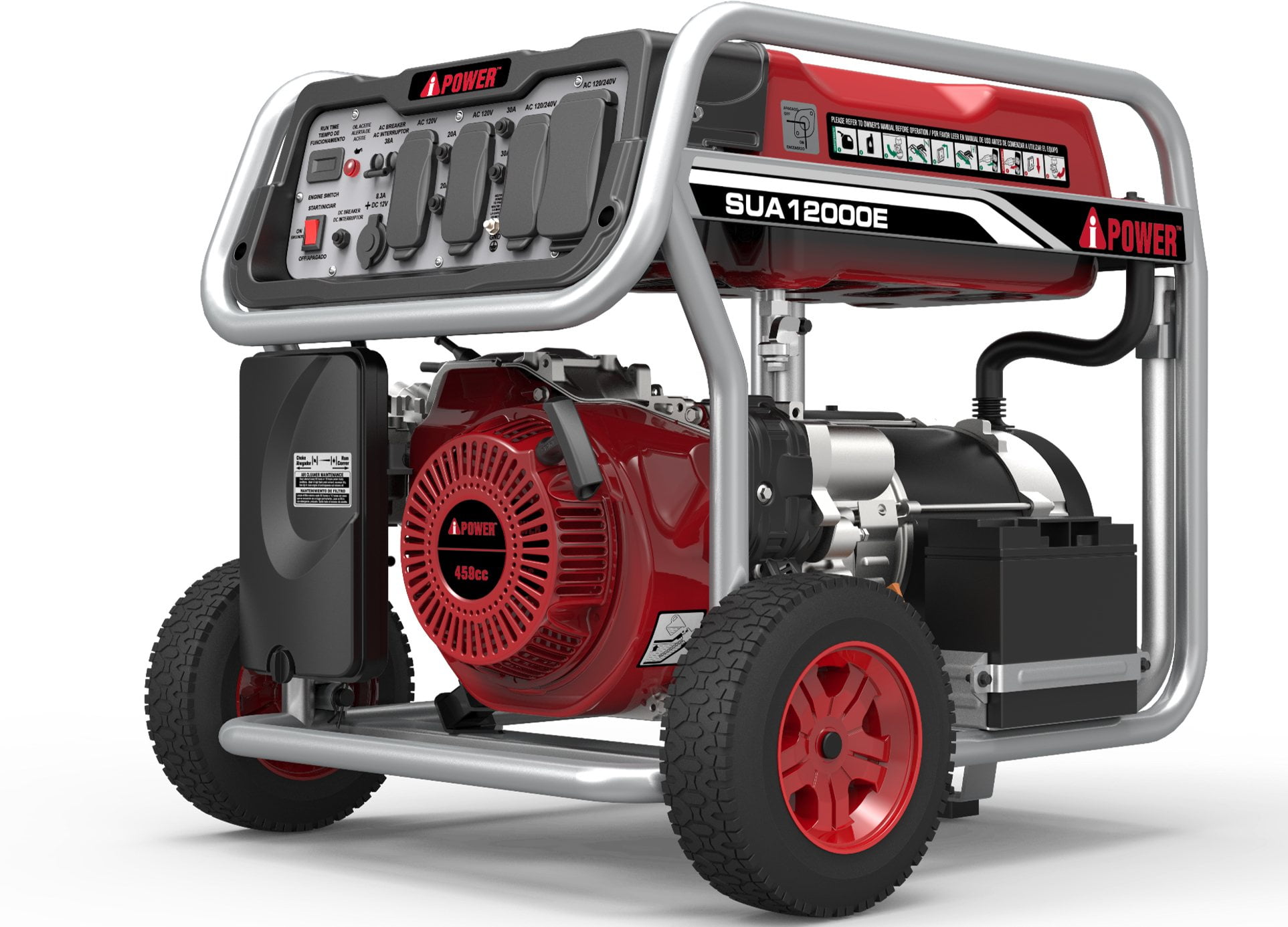
Output Receptacles: The 38A output uses a standard 14-50P plug, the same as RV 50A cables use, making one readily available. Because of the output (<40A), 8/4 stranded wire is fine. The 30A output also uses a common plug (L14-30P; which like the -50P, is configured for 3 pole [4 wire], 120/240V, so care in wiring for 120V [1 pole 3wire] is necessary).
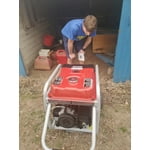
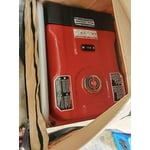
Wheels: Instructions imply that the frame is raised enough within the packing to simply install the wheels and backstand. Not so; the unit has to be raised at each end.
Battery: The hole on the negative battery terminal is set so low, it's very difficult to access the nut and bolt. While the battery can be charged with a special connection on the unit, integral charging would have been a nice touch. I use a battery float charger (about $15) and leave it connected so the battery will always be charged when needed. The engine does, however, start easily on the recoil starter.
Engine Oil: The tag on the oil dipstick says to use 10W30 oil. The manual says 30HD above 40°F. 1 qt. of 10W30 oil is supplied, but the engine takes 1.5 qt., so shop early. The hour meter is useful for oil change intervals, but the oil should be changed at least annually, regardless of the number of hours.
Valve Lash: Buried in the manual is the requirement to set valve lash after 50 hours. While clearances are given, no instructions are provided. Engine should be cold, and lash is measured between the backside (unengaged sector) of the cam and the follower. Not everyone has the special feeler gauges required for this, and at over 250 lbs,, toting it to a shop is impractical for most owners. That said, the valves are easily accessible, another plus for the DIYer.
Noise: There is a claim this generator is “super quiet”; it is not, but it is among the less noisy ones in its class. For truly a quiet generator, one would have to get a MUCH more expensive unit.
Fuel Filter: There is no fuel filter, but one can easily be installed.
Idle Storage: The manual suggests draining the fuel tank or using a stabilizer. Most folks would prefer not to have to fuel the generator in the rain or snow when it's needed, nor is there a quickdrain for the fuel tank. The best alternative is to use stabilizer (formulated for the usual ethanol-poisoned gas) and top off the tank. Without air, fuel is pretty stable. A small dose of a good carb cleaner is also suggested. I use SeaFoam or Techron.
Stopping the Generator: The manual is obscure; most entries say to use the “Stop” switch. This is OK for refueling, but for storage, the fuel valve should be closed and the generator allowed to stop from fuel starvation. This will minimize the chance of gumming up the carburetor.

 Member ratings & reviews for