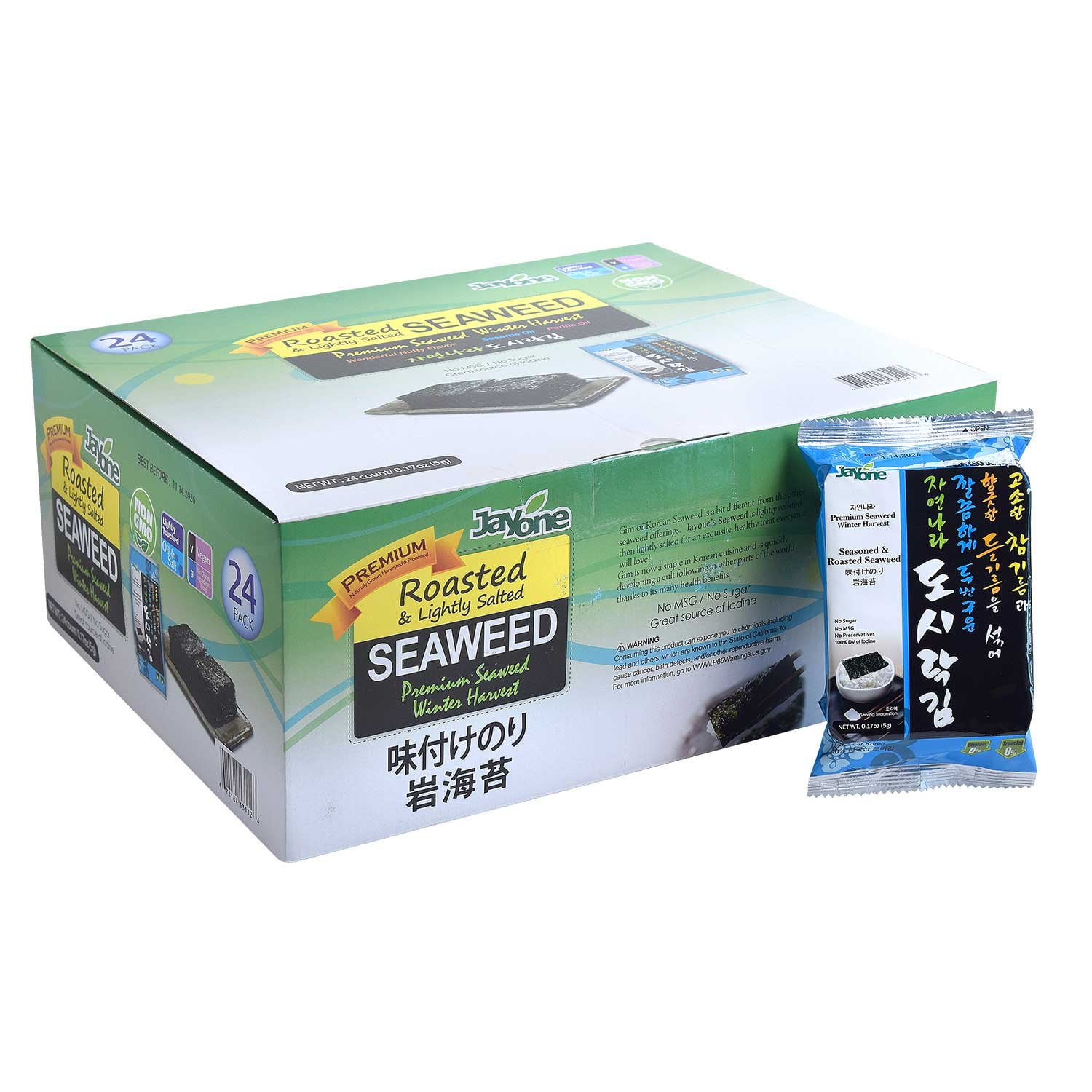
Mild & savory, high in iodine; good if one likes the roasted seaweed taste!
FYI for those referring to the P65 (the 1986 Proposition 65 aka Safe Drinking Water and Toxic Enforcement Act) warnings required only by the the state of California.
The list contains a wide range of naturally occurring and synthetic chemicals that include additives or ingredients in pesticides, common household products, food, drugs, dyes, or solvents. Listed chemicals may also be used in manufacturing and construction, or they may be byproducts of chemical processes, such as motor vehicle exhaust. This list, which must be updated at least once a year, has grown to include approximately 900 chemicals since it was first published in 1987.
As part of the law, most businesses selling products in California must provide “clear and reasonable warnings” before knowingly exposing people to any chemical on the list, unless the expected level of exposure would pose no significant cancer risk. This warning is often in the form of a label on the product or its packaging
The law defines “no significant risk” as a level of exposure that would cause no more than 1 extra case of cancer in 100,000 people over a 70-year lifetime. So a compound doesn’t have to be labeled if a person exposed to the substance at the expected level for 70 years is estimated to have less than a 1 in 100,000 chance of getting cancer due to that exposure. The law also has similar strict cutoff levels for birth defects and reproductive harm.
Businesses decide whether to put warning labels on their products based on their knowledge of the types of chemicals in them.
For any product made after August 2018, the Prop 65 labels typically say something like what's on the individual pkg. As of August 2018, the label should name at least one chemical of concern. The label doesn’t have to list all of them. Prior to August 2018, businesses didn’t have to specify which chemical(s) of concern were in their products, so any products made before this date might not list any specific chemicals.
Products that are sold outside of California are not required to have the warning label even if they contain substances that might cause cancer. Some companies that sell products all over the US only label those sent to California, even though all their products contain the same compounds. Some companies have the same packaging sent to all other 49 states.
[A large # of consumer products carry these warnings in the state of CA which requires them. All other states don't have this requirement by law so one many be using/consuming stuff everyday without this stamped info. 🤷🏻♀️. Unless a specific amount is listed, difficult for consumers to figure out how much of which chemical is causing what level of harm)].